
Published 12 October 2026
Words by Julia
As we embark on Mental Health Awareness Week in Aotearoa, the theme this year is 'Belonging matters'. This has prompted much kōrero in the Changing Minds’ whare and we’ve been asking—what is belonging? And who is belonging?
The word itself conjures an image of belonging within a group of people, but while there may be no 'I' in team, there is an 'I' in belonging, and it's important to remember that belonging starts with the self and can mean different things to different people.
One perspective is that, from the moment we’re conceived, we belong. Not as property of anyone else or a member of a group, but we belong here on earth, as a human being, in the time and place and space that we arrive in.
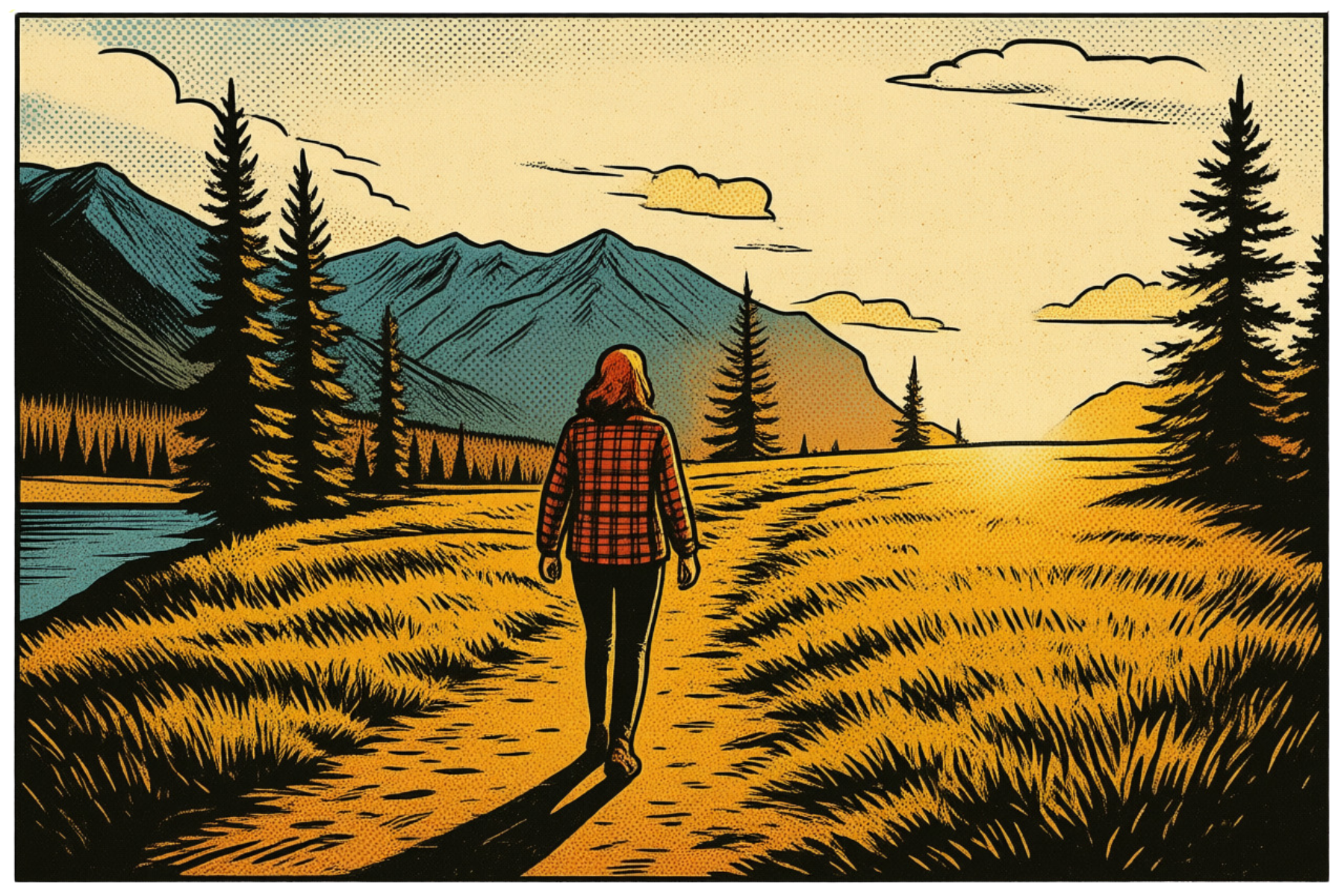
And from that moment, we’re unique. Nobody else on this planet will have the life that we have, with its specific combination of thoughts and experiences, the precise steps we take, the lessons we learn, in the time that we live in. We walk a completely personal path—surrounded by eight+ billion people who are all doing the same thing, but our journeys are essentially distinct and for us alone to travel, in our minds and in our bodies.
Therefore, when we talk about belonging and well-being in connection with each other, there is a distinction that our well-be[long]ing doesn't (and shouldn't) rely on other people. If we are, first and foremost, comfortable in our own skin, content in our own company, we will always feel a sense of belonging—to ourselves, to nature, and with others, as we so choose.
Belonging to the human race is a given, but when it comes to belonging within any specific group of people, that is a choice and one that we should get to make for ourselves.
Alongside the what and the who of belonging, many of us might ask where do I belong? That image of belonging as being a group of people is often a group of the same or similar people—a book club, a sports team, a grief support group. But belonging is also about embracing our differences, challenging our judgements, and growing from discomfort or disagreement.
Belonging to the human race is a given, but when it comes to belonging within any specific group of people, that is a choice and one that we should get to make for ourselves. For example, for those who are introverted or highly empathic, energy is drawn from spending time alone. Belonging, in terms of social interaction, especially as a suggested key to well-being, is not our truth. For those who haven’t found their tribe yet, or circumstantially find themselves alone, or choose to do life solo, we can be well, content, fulfilled beings without social belonging. Belonging doesn't just mean surrounded by community—there's an 'I' in unity, too.
This perspective may sound particularly individualistic and at odds with the beliefs of collective cultures, but these views can co-exist. In Te Whare Tapa Whā, Durie’s model of Māori health, there are several aspects that point to belonging—te taha whānau may be the most obvious, the aspect of collective health. Te taha hinengaro, the element of mental health, also speaks to a healthy mind being one that thinks of others first, and te taha wairua, spiritual health, is about connection to whenua and ancestors.
Belonging is fluid and flexible, it is wherever we find ourselves on our paths, in time and space, history and place, and however we choose to belong along the way.
We can value a collective way of life, and we can live by those values, and still honour the independent self. The collective is only as healthy as the individuals within it, right? And, when it comes to belonging, there isn’t one way to be[long]. We can be a member of a community without actively taking part in it, just as much as we can be a member of a community without feeling like we belong in it. We can be part of a whānau and apart from it. We can think of and serve others without being surrounded by others. And we can belong to a group or community that isn’t our own.
Belonging is fluid and flexible, it is wherever we find ourselves on our paths, in time and space, history and place, and however we choose to belong along the way. Belonging is collective and individual, a matter of the heart, and it starts within us.