
A collective action
Published 13 October 2026
Words by Dan
Community is notoriously difficult to describe.
“How do you define community?” is a question we at Changing Minds are asked regularly—at events, in workshops, in research, everywhere. It’s a question we see great value in discussing, even when the answer eludes us, which it always does. Sometimes we talk about the question and search for an answer, as if doing so will unearth some great truth that everyone will agree on—something we can name at the start of our projects or workshops, and everyone will say “Yes! That’s it! Finally, we can know peace!”
But, truthfully, I don’t know if a singular answer exists and, perhaps more importantly, is a singular definition even useful? We know community refers to a collection of people, or more specifically people choosing to connect. But the questions of ‘why’ and ‘how’ people connect are far more difficult to define or agree on.
In our work, we see community choose to connect for several reasons and through a number of pathways. Online spaces where the goal is mutual support—community through supporting one another by sharing tools and resources, while also holding each other accountable. In-person social spaces where community grows through shared identity. We’re seeing a growing demand for knowledge and learning that emerges from identity-led spaces in mental health support. Community members now expect, rightfully so, their healthcare to not only address health in isolation, but recognise connected experiences of their identity and humanity.
We strive for better Lived Experience inclusion in service design, mental health discourse and research, media and entertainment, news reporting, and in community at large.
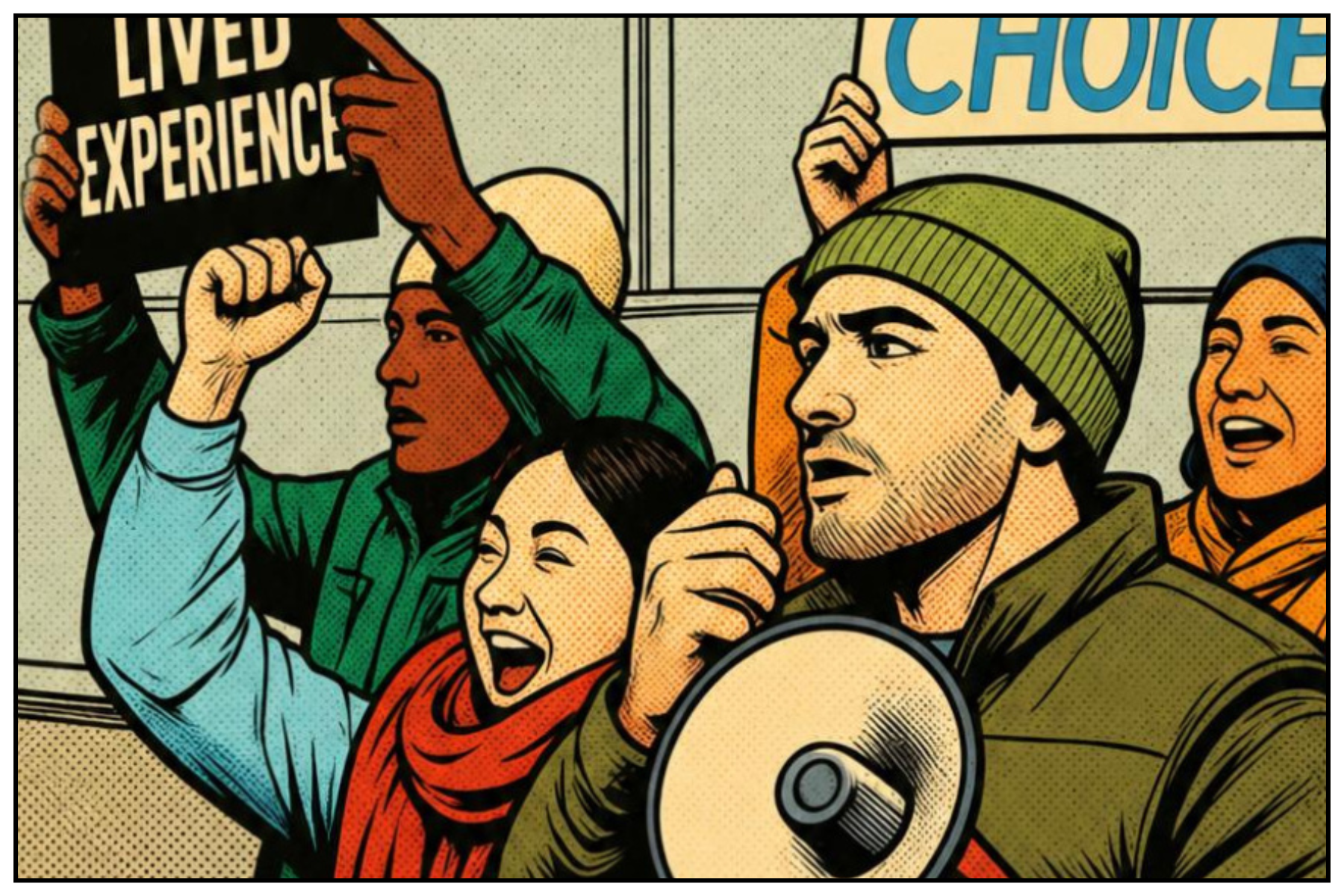
So what does community look like in action for Changing Minds? For us, it might be thought of as community through doing or by sharing collective action.
By ‘doing,’ we mean the projects we see the most engagement with are usually those with a clearly defined active component. Taking part in research, learning as part of a workshop, being a participant of co-design or co-creation. At the centre of our work is a sense of completing a specific task, or ‘doing something,’ often with an advocacy component or kaupapa. Conversely, it’s rarer to see Changing Minds running a social event or hosting a gathering—not that we’re opposed to it, rather social connection hasn’t been what our community has asked of us the past few years. It's far more likely that we’re asked for educational content, resources and support, or projects to take part in.
This makes sense to us—the whakapapa of our community is one born from social action. We honour the work and advocacy of the mad pride and psychiatric survivor movements in the work we do today. We try to carry their history and knowledge with us and share it with others as they work alongside us. We ensure rangatahi are included, given a chance to learn and a chance to fight for their future, many of them following in the footsteps of previous generations or fighting for parents and grandparents who were denied the right to speak. We take the lead from community who continue to navigate through their own journeys, and wish to share their experiences, good and bad, for the betterment of others. We strive for better Lived Experience inclusion in service design, mental health discourse and research, media and entertainment, news reporting, and in community at large.
You can’t force community to form any more than you can make a tree grow faster by yelling at it. Trying to force your idea of community on others is a quick recipe for “sod off.”
Vitally, we should say none of these forms of community are any better or worse, any more or less necessary, than the others. They’re just different. They meet different needs. When communities emerge and grow organically, it’s most often because organisers are listening to the needs of community members around them. In a sense community isn’t made, it’s nurtured. You can’t force community to form any more than you can make a tree grow faster by yelling at it. Trying to force your idea of community on others is a quick recipe for “sod off.”
It’s only by listening to these community members, all of them, that we at Changing Minds can even start to answer the question of “What community means to us?” The answer lies in the connection between all these experiences, and the nuances within and between them—too many to list or try shove into one single answer to that question.
"What does community mean to us?" It means a lot.